Free project estimator
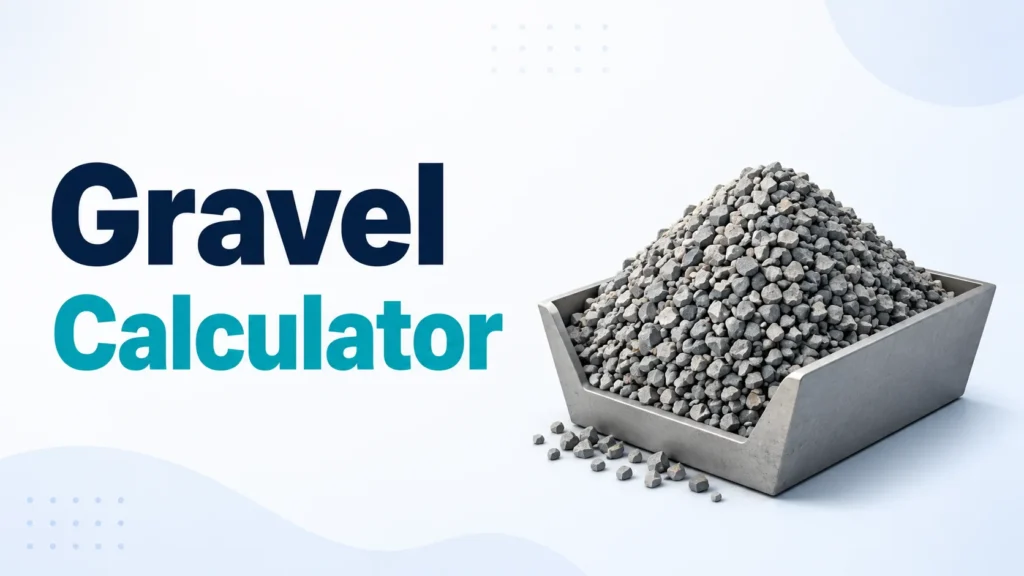
Gravel Calculator
Estimate gravel volume, weight, bags, truck loads, and project cost with the Gravel Calculator.
- Cubic yards and tons
- Bag and truck estimates
- Optional project cost
Your Gravel Estimate
How to use the Gravel Calculator
Measure the project area, choose the gravel depth and material type, then calculate. Optional price fields can turn the material estimate into a simple budget before you call a supplier.
Select a rectangle, circle, triangle, or enter the square footage directly.
Use the suggested depth as a starting point, then adjust it for your project.
Choose a common rock type or enter the density supplied by your local yard.
Compare cubic yards, tons, bags, truck loads, and the optional estimated cost.
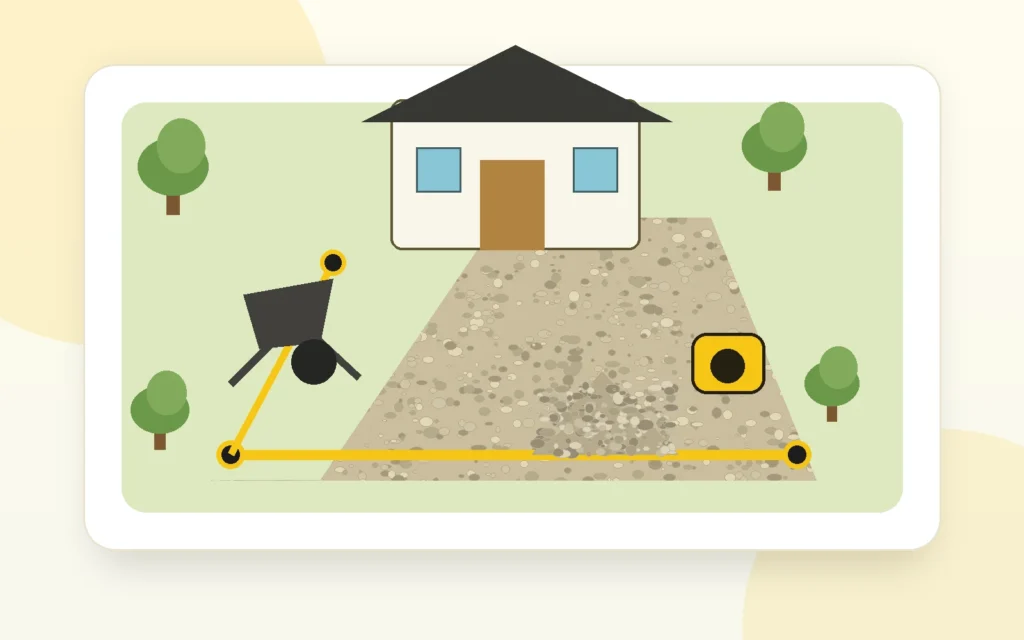
Measure before ordering
For a driveway or path, take the longest usable length and width rather than measuring only the visibly worn area. For curves and irregular beds, split the space into smaller rectangles and add the areas together. A careful measurement usually saves more money than trying to guess the final tonnage.
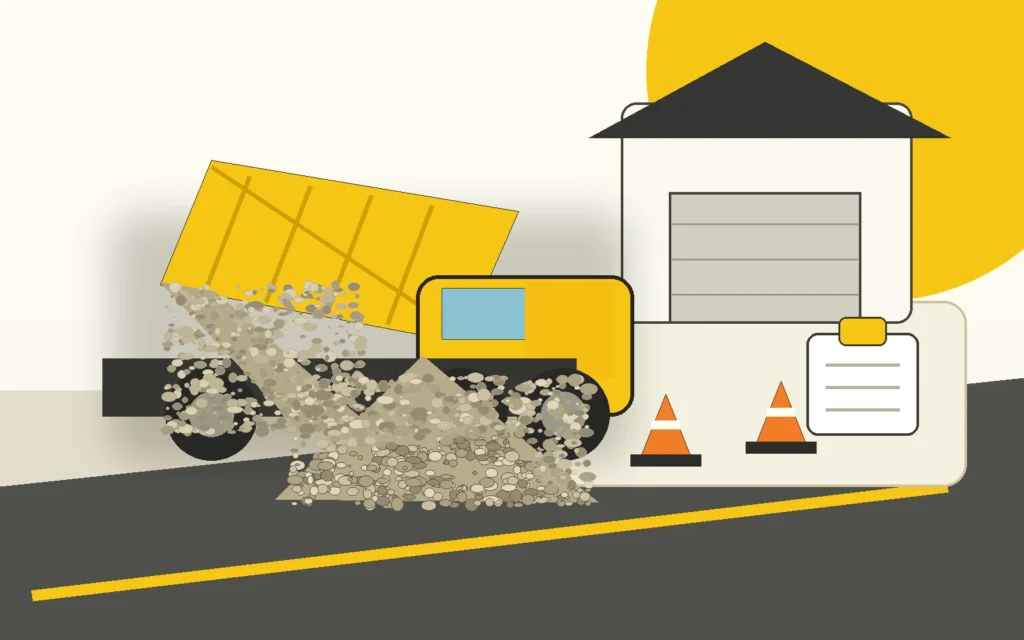
Plan delivery space
Bulk gravel needs a safe drop point with enough room for the delivery truck. Confirm gate width, overhead wires, soft ground, and local access before ordering. Ask the supplier whether the quoted load is sold by weight or volume, because the two prices cannot be compared without a density estimate.
Read the complete gravel planning guide
How much gravel do you need?
The basic calculation starts with area and depth. The calculator converts the selected shape into square feet, changes the entered depth into feet, and multiplies the two values to find cubic feet. Cubic feet are divided by 27 to produce cubic yards. The selected gravel density then provides an estimated tonnage.
Weight can change with rock size, moisture, dust content, and compaction. Treat the result as an ordering estimate and compare it with your supplier’s stated material density. For uneven ground or a project that will be compacted, an extra allowance of 5% to 15% is usually practical.
Gravel depth guide
| Project | Common starting depth | Planning note |
|---|---|---|
| Landscape bed | 2 inches | Often enough for decorative coverage over fabric. |
| Walkway or garden path | 2–3 inches | A stable edging helps keep loose gravel in place. |
| Patio base | 4 inches | Compaction and soil conditions may require more. |
| Driveway surface | 3–4 inches | This does not include a deeper structural base. |
| Driveway or parking base | 4–8 inches | Heavy traffic and weak soil can increase the depth. |
| French drain | 12 inches or more | Use the trench dimensions and drainage design. |
Bulk gravel or bags?
Bags are convenient for small repairs, short borders, and areas where a truck cannot reach. Bulk material is normally easier to manage for driveways, patios, long paths, parking spaces, and drainage work. The bag estimator lets you compare the number and cost of bags with a bulk quote.
Before placing the order
- Confirm whether the supplier sells by ton, cubic yard, or truck load.
- Ask for the product density if the rock differs from the calculator’s listed options.
- Check delivery fees, minimum order size, tax, and access requirements.
- Keep a small extra amount for low spots, compaction, and future touch-ups.
Gravel Calculator FAQs
How is the gravel amount calculated?
The area is multiplied by depth to calculate cubic feet. Dividing by 27 gives cubic yards, and multiplying cubic yards by the selected material density gives estimated tons.
How many square feet does one cubic yard cover?
One cubic yard covers about 324 square feet at 1 inch deep, 162 square feet at 2 inches, 108 square feet at 3 inches, or 81 square feet at 4 inches.
How many tons are in one cubic yard of gravel?
Many common products fall between roughly 1.35 and 1.60 tons per cubic yard, but the actual number depends on material, moisture, particle size, and the supplier.
Should extra material be included?
Yes. An allowance of 5% to 15% can cover compaction, uneven ground, spreading loss, and small measuring errors. Ten percent is a reasonable starting point for many projects.
Is the estimate exact?
No. It is a planning estimate. Final requirements can change with ground conditions, installation method, compaction, moisture, and supplier measurements.