How the Can I Afford This Car Calculator Works
The can I afford this car calculator compares your monthly take-home income, current monthly expenses, estimated auto loan payment, and total car ownership costs. Instead of only looking at the loan payment, this vehicle affordability calculator USA also includes insurance, gas, maintenance, registration, parking, tolls, and other costs that affect your monthly budget.
The calculator estimates your remaining monthly money after the car, your car payment percentage of income, your total monthly car cost, and whether the car appears affordable, manageable, borderline, or too expensive.
Why You Should Not Look Only at the Car Payment
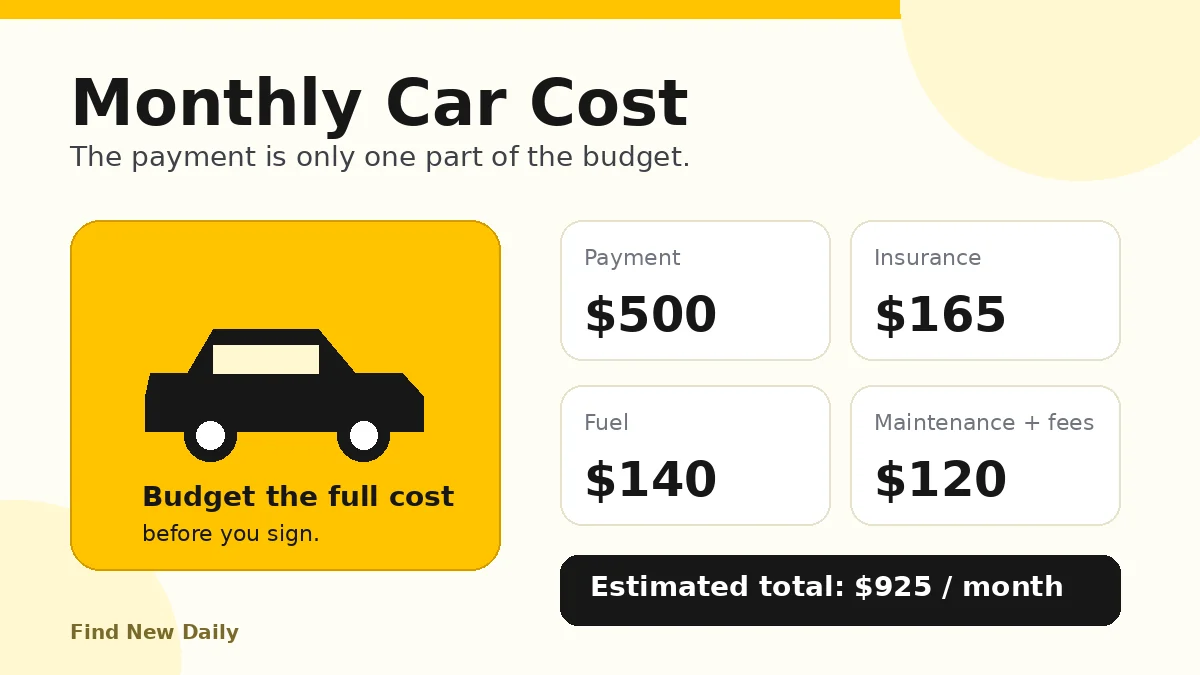
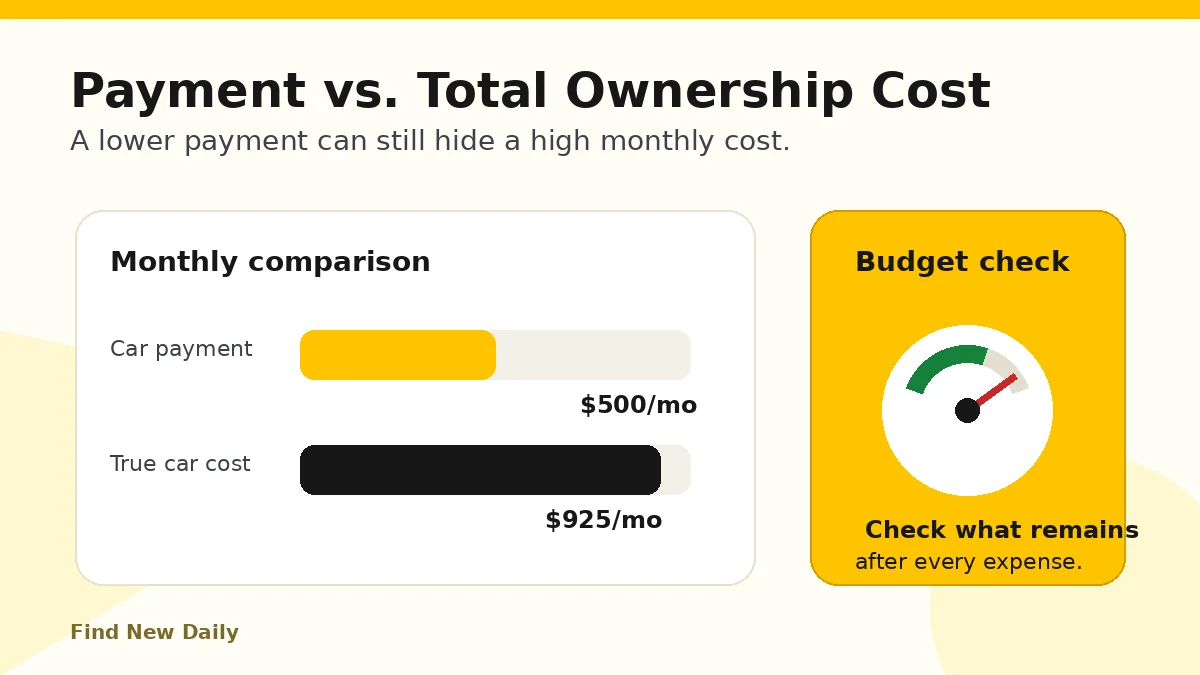
Many buyers ask, “is my car payment too high?” but the payment is only one part of the real cost. A $500 monthly payment may look affordable until you add auto insurance, gas, maintenance, tires, repairs, registration, sales tax, dealer fees, parking, and tolls. This monthly car cost calculator helps you see the true cost of owning a car before you sign a loan or lease agreement.
What Costs Should You Include Before Buying a Car?
Monthly Car Loan Payment
Your car loan payment is usually the largest fixed cost. It depends on the vehicle price, down payment, trade-in value, loan term, APR, taxes, and fees.
Auto Insurance
Insurance can vary widely by driver, vehicle, ZIP code, state, coverage level, and insurance company. Always compare insurance quotes before buying a car.
Gas or Fuel Cost
Fuel cost depends on how many miles you drive, the vehicle MPG, and the local gas price. Trucks, SUVs, and older vehicles often cost more to fuel than smaller efficient cars.
Maintenance and Repairs
Budget for oil changes, tires, brakes, batteries, inspections, and unexpected repairs. Used cars may have lower payments but higher maintenance costs.
Registration and Title Fees
Registration, title, inspection, and state fees may be paid yearly, but they still affect your monthly car budget. This car ownership cost calculator converts annual fees into a monthly estimate.
Parking and Tolls
Parking fees, toll roads, garage fees, and city permits can add a large monthly cost for some drivers.
Sales Tax and Dealer Fees
Sales tax, documentation fees, destination charges, and dealer add-ons can increase the amount financed. Advanced Mode allows you to include estimated taxes and dealer fees.
Emergency Repairs
Even reliable cars can need unexpected repairs. Leaving emergency savings in your budget can help you avoid credit card debt after a car problem.
How Much of Your Income Should Go Toward a Car?
A common comfort guideline is to keep the monthly car payment around 10% of take-home pay when possible. For total car costs, including insurance and gas, many people try to stay near 15% to 20% of take-home income. These are not strict rules, but they can help you avoid a car payment that makes rent, groceries, savings, debt payments, and emergencies harder to manage.
Can I Afford a $500 Car Payment?
A $500 car payment may be affordable for one person and too expensive for another. It depends on your income, rent, debt, insurance, gas, savings, and other bills. If your take-home income is $4,000 and your car payment is $500, the payment alone is 12.5% of your income. But after adding insurance, gas, maintenance, and fees, the real monthly car cost could be $800 to $1,000 or more.
That is why a car payment calculator with insurance and gas is more useful than a basic payment-only estimate.
How Much Car Can I Afford Making $4,000 a Month?
If you take home $4,000 per month, a 10% car payment guideline suggests a payment near $400 per month. A 15% to 20% total car cost range suggests total monthly car costs of about $600 to $800. For example, a $400 payment plus $160 insurance, $140 gas, $100 maintenance, and $30 monthly registration fees would equal about $830 per month, which may already be above a comfortable range for some budgets.
The best answer depends on your rent, debt, emergency savings, and the real monthly car cost after expenses.
Car Payment vs Total Monthly Car Cost
The car payment is only the loan or lease payment. Total monthly car cost includes the payment plus insurance, fuel, maintenance, repairs, registration, parking, tolls, and other car costs. A car budget calculator should include both numbers because the total ownership cost shows how much the vehicle truly affects your life every month.
New Car vs Used Car Affordability
A new car usually has a higher monthly payment but may have lower short-term repair costs and warranty coverage. A used car usually has a lower purchase price and lower payment, but maintenance and repair costs may be higher. A certified pre-owned vehicle is often a middle option between new and used. A lease may offer lower monthly payments, but it can include mileage limits, wear-and-tear fees, and no ownership at the end.
How Loan Term Affects Affordability
Longer loan terms such as 72-month and 84-month loans can reduce the monthly payment, but they may increase total interest and keep you in debt longer. A lower monthly payment does not always mean the car is cheaper. Use the auto loan affordability calculator in Advanced Mode to compare the estimated monthly payment, total of payments, and total interest paid.
Tips to Make a Car More Affordable
- Increase your down payment to reduce the loan balance.
- Choose a lower-priced car instead of stretching your budget.
- Compare insurance quotes before buying.
- Improve your credit before applying for financing.
- Choose better fuel economy to lower monthly gas costs.
- Avoid unnecessary dealer add-ons and extended extras you do not need.
- Consider a shorter loan term if the payment still fits your budget.
- Keep emergency savings before taking on a new car loan.
- Compare financing from banks, credit unions, online lenders, and dealers.
Who Should Use This Car Affordability Calculator?
This car loan affordability calculator is helpful for first-time car buyers, used car shoppers, people comparing car payments, students and young professionals, families buying a second car, people with high rent, and anyone trying to avoid an unaffordable auto loan. It is especially useful when you want to know how much car you can afford after monthly expenses.
Frequently Asked Questions
1. How do I know if I can afford a car?
You can estimate affordability by comparing your take-home income, current bills, car payment, insurance, gas, maintenance, fees, and remaining monthly money. A car that leaves little room for savings or emergencies may be risky.
2. Can I afford a $500 car payment?
It depends on your income and other expenses. If you take home $4,000 per month, a $500 payment is 12.5% of your income before insurance, gas, and maintenance.
3. How much car can I afford making $4,000 a month?
A rough comfort range may be around $400 for the payment and about $600 to $800 for total monthly car costs, but your rent, debts, savings, and insurance costs can change the answer.
4. Is a $700 car payment too much?
A $700 car payment may be high for many budgets, especially after adding insurance, gas, maintenance, and fees. The payment should be compared with your monthly take-home income and remaining money.
5. Should I include insurance when calculating car affordability?
Yes. Insurance is a major part of the true monthly cost of owning a car. Always estimate insurance before buying.
6. How much should I budget for gas each month?
Gas depends on monthly miles, MPG, and fuel price. The calculator uses monthly miles divided by MPG multiplied by gas price per gallon.
7. How much should I save for maintenance and repairs?
Many drivers set aside a monthly amount for oil changes, tires, brakes, inspections, and unexpected repairs. Older vehicles may need a higher repair budget.
8. Is a 72-month car loan a bad idea?
A 72-month loan is not always bad, but it can increase total interest and keep you in debt longer. Compare the monthly payment with the total loan cost.
9. Should I buy a new or used car?
A new car may offer warranty coverage and fewer short-term repairs, while a used car may have a lower price and payment. The better choice depends on your budget and risk tolerance.
10. What is the true monthly cost of owning a car?
The true monthly cost includes your car payment, insurance, gas, maintenance, registration, parking, tolls, and other ownership costs.
11. How much money should be left after paying for a car?
There is no single rule, but having at least a few hundred dollars left after monthly expenses can help with emergencies, savings, and unexpected bills.
12. Does this calculator guarantee loan approval?
No. This calculator does not guarantee loan approval. Lenders may review your credit score, income, debt, employment, vehicle, loan amount, and other factors.