Period Calculator
Calculate My Period
Enter your last period start date and average cycle details to estimate your next period, ovulation date, fertile window, PMS days, and future period calendar.
Your Period Calculator Results
These period tracker results are estimates only and can change from cycle to cycle.
Your Estimated Cycle Calendar
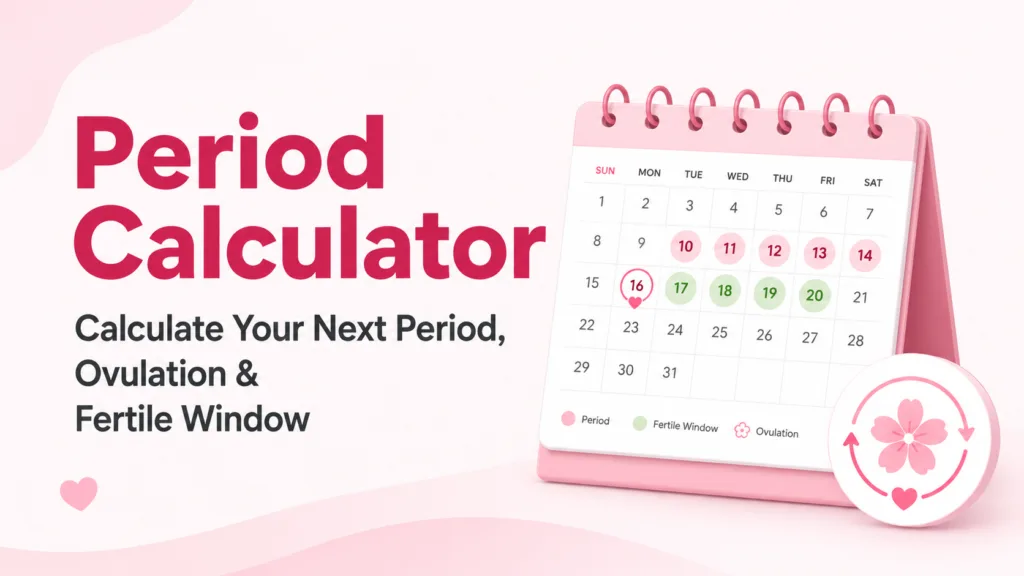
This simple period calendar highlights your estimated period days, fertile window, ovulation day, and PMS days.
Future Period Predictions
Use this future period date calculator table for general planning. Dates may change if your cycle changes.
| Cycle | Period Start | Period End | Ovulation Estimate | Fertile Window |
|---|
What Is a Period Calculator?
A period calculator is a simple planning tool that estimates upcoming menstrual cycle dates. It usually starts with the first day of your last period and your average cycle length. From that information, the calculator can estimate your next period start date, expected period end date, ovulation estimate, fertile window, PMS days, and future cycle dates. This type of menstrual cycle calculator can be useful when you want a quick answer to questions like “when is my next period?” or “how do I calculate my period date?”
This free next period calculator is designed for people in the United States who want an easy, private, browser-based period tracker. It does not require an account, does not save your dates, and does not send your information to a server. You can use it before travel, school events, work deadlines, vacations, weddings, sports activities, or doctor appointments. The results should be treated as estimates because menstrual cycles can vary from month to month.
A period date calculator is most helpful when your cycle is fairly regular. If your cycle is often irregular, your predicted period date may be less accurate. In that case, tracking several months of periods can help you understand your own pattern more clearly.
How This Period Calculator Works
The calculator adds your average cycle length to the first day of your last period to estimate the next period start date. For example, if your last period started on March 1 and your average cycle length is 28 days, your next period may be estimated around March 29. The expected period end date is calculated by adding your average period length and subtracting one day, so a 5-day period beginning on March 29 may be estimated to end on April 2.
The ovulation calculator part of this tool estimates ovulation around 14 days before the next predicted period. The fertile window calculator estimates the fertile window as the five days before ovulation through the estimated ovulation day. The PMS estimate begins around seven days before your predicted next period and ends the day before the period may start. These methods are common calendar-based estimates, but they cannot confirm ovulation or predict every cycle accurately.
Cycle length
Cycle length means the number of days from the first day of one period to the first day of the next period.
Period length
Period length means the number of days your bleeding usually lasts. This calculator uses that number to estimate your period end date.
How to Count Your Menstrual Cycle
To count your menstrual cycle, begin with cycle day 1. Cycle day 1 is usually the first day of real menstrual bleeding, not light spotting. Count each day until the day before your next period begins. When your next period starts, that becomes day 1 of a new cycle.
For example, if your period starts on March 1 and your next period starts on March 29, your cycle length is 28 days. If your next period starts on April 1 instead, your cycle length is 31 days. Keeping a simple period calendar or menstrual cycle tracker can help you find your average cycle length over time.
Some people have very predictable cycles, while others notice changes due to stress, sleep, travel, illness, exercise, weight changes, hormonal changes, or life stage. Because of that, a period calculator should be used as a planning guide rather than a guaranteed schedule.
What Is a Normal Period Cycle?
Many people use 28 days as a common average cycle length, but real menstrual cycles are not the same for everyone. Some people have shorter cycles, and others have longer cycles. Your personal pattern may also change over time. A menstrual cycle calculator can help you estimate dates, but it cannot define what is normal for your body.
Many people have cycles that fall within a general range, but your personal pattern may be different. Instead of focusing only on one number, it can be helpful to look at your pattern across several months. If your periods are usually predictable and then suddenly become very different, that may be a reason to pay closer attention and consider professional guidance.
Why Your Period May Be Early or Late
A late period calculator can estimate when a period might have been expected, but it cannot explain the exact reason a period is early or late. Menstrual timing can be affected by many everyday and health-related factors. A period that is a few days different from your estimate may happen because ovulation occurred earlier or later than usual.
- Stress or emotional changes
- Travel or time zone changes
- Poor sleep or schedule changes
- Weight changes
- Heavy exercise
- Recent illness
- Hormonal changes
- Birth control changes
- Pregnancy
- Breastfeeding
- Perimenopause
- PCOS or thyroid-related concerns
If changes are sudden, severe, repeated, or concerning, speak with a qualified healthcare professional. This tool is informational and does not diagnose medical conditions.
What Is the Fertile Window?
The fertile window is the time around ovulation when pregnancy is more likely. This fertile window calculator estimates the five days before ovulation and the estimated ovulation day. The estimate is based on a simple calendar method, so it may not match your actual fertile days. Ovulation can shift because of stress, illness, sleep changes, travel, hormonal changes, or irregular cycles.
Important:
This period calculator and fertile window estimate should not be used as a guaranteed way to prevent pregnancy. If you need pregnancy prevention advice, talk with a qualified healthcare professional.
What Is Ovulation?
Ovulation is the part of the menstrual cycle when an ovary releases an egg. This ovulation calculator estimates ovulation around 14 days before your next predicted period. That timing is a common estimate, but ovulation can happen earlier or later. Calendar estimates cannot confirm that ovulation happened. Some people also track cervical mucus, basal body temperature, ovulation predictor kits, or symptoms, but those methods still have limits.
How to Use This Tool as a Period Tracker
You can use this period tracker to plan around your estimated menstrual cycle. After you calculate your period, review the next period date, period end date, PMS estimate, ovulation estimate, fertile window, and future period predictions. The copy summary button makes it easy to save a plain text note for your personal calendar, journal, or planning app.
People often use a period calendar to plan travel, school activities, work presentations, vacations, weddings, sports, doctor appointments, and personal health tracking. For best results, update your average cycle length after tracking several months. If your cycle varies widely, select the irregular cycle option so the results remind you that the estimate may be less reliable.
Period Tracking Tips
- Record the first day of bleeding each month.
- Track how many days bleeding lasts.
- Note cramps, headaches, mood changes, acne, bloating, fatigue, or food cravings.
- Update your average cycle length after several months of tracking.
- Do not rely on calendar predictions alone for pregnancy prevention.
- Talk with a healthcare professional if symptoms feel severe or unusual.
When to Talk to a Doctor
This period date calculator is for education and planning only. You may want to talk to a healthcare professional if you experience very heavy bleeding, severe cramps, bleeding between periods, missed periods without a known reason, sudden major cycle changes, period pain that affects school, work, or daily life, dizziness, fainting, or unusual symptoms.
A healthcare professional can consider your full health history, symptoms, medications, pregnancy possibility, birth control use, and other factors. This online calculator cannot replace personalized medical advice.
Period Calculator FAQs
Medical Disclaimer
This period calculator is for general educational and planning purposes only. It does not diagnose health conditions, confirm pregnancy, confirm ovulation, or replace advice from a qualified healthcare professional.
This calculator runs in your browser. The dates you enter are not saved by this page.