Weekly Grocery Budget Calculator USA – Plan Your Food Budget
Use the Weekly Grocery Budget Calculator USA – Plan Your Food Budget to estimate a practical weekly and monthly grocery budget for your household in the United States.
Add your household details, location, diet and shopping habits. The calculator gives you a practical weekly estimate first, followed by a grocery list, a short meal plan and savings ideas you can actually use.
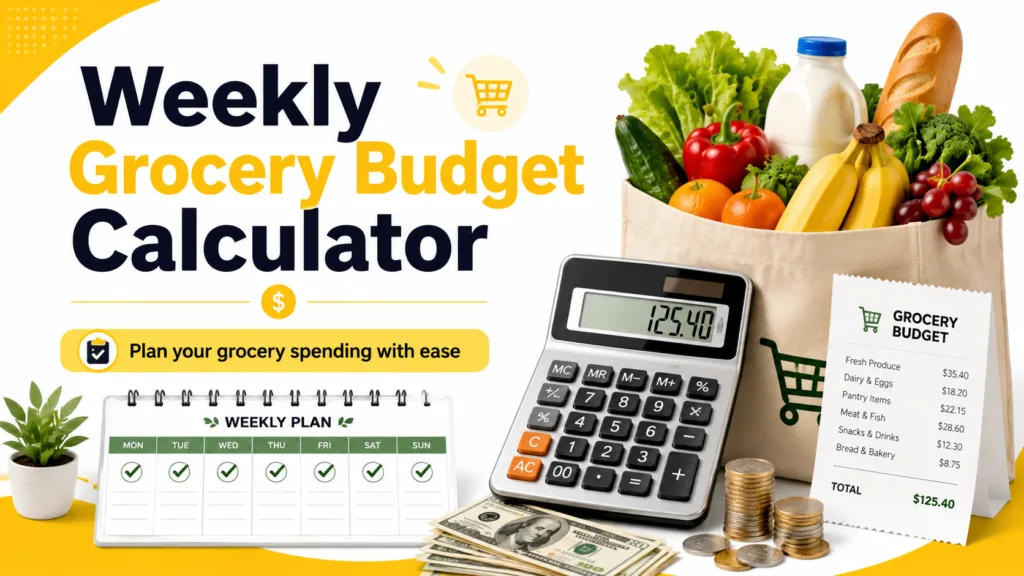
Weekly Grocery Budget Calculator USA – Plan Your Food Budget
Enter your household details below to estimate how much you should spend on groceries each week. This monthly grocery budget calculator also compares your current weekly budget with a recommended grocery cost calculator estimate.
Your Grocery Budget Results
Your Weekly Budget
Recommended Weekly Budget
Recommended Monthly Budget
Grocery Budget Summary
Budget Comparison Bar
Category Breakdown
| Category | Percent | Estimated Weekly Amount |
|---|
Personalized Grocery List
3-Day Budget Meal Plan
Money-Saving Tips
Store-Based Tips
Cheaper Food Substitutes
| Higher-Cost Item | Budget Substitute |
|---|---|
| Steak | Chicken thighs, beans, or ground turkey |
| Fresh berries | Bananas, apples, or frozen fruit |
| Name-brand cereal | Store-brand oats |
| Pre-cut vegetables | Whole vegetables or frozen vegetables |
| Salmon | Canned tuna or frozen fish |
| Restaurant meals | Meal prep bowls |
| Organic snacks | Store-brand snacks |
| Bottled drinks | Water, tea, or homemade drinks |
Plan the Basket Before You Reach the Store
A useful grocery budget is more than one number. It should reflect who lives at home, what your family normally eats and where you shop. Start with the calculator, then use the category breakdown to decide where the money needs to go.
Keep the plan realistic. A smaller budget can still work when several meals share the same ingredients and leftovers are used on purpose instead of by accident.
Turn the Budget Into Meals You Will Eat
The easiest way to stay close to a weekly limit is to decide on a few breakfasts, lunches and dinners before shopping. This page creates a simple three-day plan so you have a starting point rather than a long, generic list.
Change anything that does not suit your household. The best budget plan is the one that fits your routine and keeps food waste low.
How Weekly Grocery Budget Calculator USA – Plan Your Food Budget Works
The weekly grocery budget calculator estimates grocery spending based on your household size, state, diet type, shopping style, cooking frequency, snack preference, and weekly budget. It uses a simple grocery budget planner formula with adult and child food cost estimates, then adjusts the amount using state cost multipliers and food preference multipliers.
This grocery budget calculator by state is designed for everyday planning. It does not track your personal data, does not require signup, and does not use paid external APIs. The result is an estimated weekly and monthly grocery budget that can help you plan your shopping list before visiting Walmart, Aldi, Kroger, Costco, Target, Publix, Safeway, Trader Joe’s, or a local grocery store.
How Much Should You Spend on Groceries Per Week?
How much you should spend on groceries depends on your family size, location, diet, store choice, and cooking habits. A person who cooks most meals at home may spend less than someone who buys ready-to-eat meals, premium brands, snacks, drinks, or specialty diet foods.
A food budget calculator can give a helpful starting point, but your real grocery cost may change based on your city, season, sales, coupons, food allergies, school lunches, work lunches, and household preferences.
Average Weekly Grocery Budget by Family Size
| Household Size | Estimated Weekly Grocery Budget |
|---|---|
| 1 person | $50–$90 per week |
| 2 people | $100–$180 per week |
| 3 people | $140–$230 per week |
| Family of 4 | $180–$300 per week |
| Family of 5 | $230–$380 per week |
These are estimated ranges only. Actual grocery costs can vary by state, city, grocery store, diet type, food quality, and how often your household cooks at home.
Grocery Budget for One Person
A grocery budget for one person is often easier to control because the shopping list is smaller, but single-person households can still overspend when buying convenience foods, takeout, snacks, and small package sizes. A practical grocery budget for one person may include oats, eggs, rice, beans, pasta, frozen vegetables, bananas, peanut butter, yogurt, and simple proteins.
If you are searching for a cheap grocery list for one person or a weekly food budget for a single person, focus on meals that use the same ingredients in different ways. For example, rice can be used in bowls, soups, stir-fries, and leftovers. Frozen vegetables are useful because they last longer and reduce waste.
Grocery Budget for 2 People
A grocery budget for 2 people works well when couples, roommates, or two adults share pantry staples and cook larger portions. Buying family-size rice, pasta, beans, oats, potatoes, frozen vegetables, and store-brand basics can lower the cost per serving.
Two people can also save by planning dinners that create leftovers for lunch. A simple grocery list on a budget for two people may include eggs, chicken thighs, ground turkey, beans, lentils, pasta, rice, tortillas, apples, bananas, lettuce, carrots, canned tomatoes, and yogurt.
Weekly Grocery Budget for Family of 4
A weekly grocery budget for family of 4 usually needs more planning because children, snacks, breakfasts, lunches, and dinners can quickly increase the total cost. Families may also need school lunch items, quick breakfast foods, fruit, milk, and simple meals that everyone will eat.
A family grocery budget calculator can help you compare your current grocery shopping budget with a recommended estimate. For a family of 4, buying store-brand items, frozen vegetables, bulk pantry staples, and budget proteins can make a big difference.
How to Build a Cheap Grocery List
A cheap grocery list should start with flexible pantry staples that can be used in many meals. These foods are often affordable, filling, and easy to cook:
- Rice
- Beans
- Pasta
- Oats
- Eggs
- Potatoes
- Frozen vegetables
- Bananas
- Peanut butter
- Canned tuna
- Lentils
- Store-brand bread
Best Budget Foods to Buy in the USA
The best budget foods to buy in the USA are usually simple ingredients that provide multiple servings and work in many recipes. Consider adding these affordable staples to your grocery list:
- Eggs
- Oats
- Rice
- Beans
- Lentils
- Pasta
- Potatoes
- Frozen vegetables
- Canned tomatoes
- Chicken thighs
- Ground turkey
- Bananas
- Apples
- Peanut butter
- Yogurt
How to Save Money on Groceries
To save money on groceries, plan meals before shopping and build your grocery list around ingredients you already have. Check your pantry, refrigerator, and freezer before going to the store so you do not buy duplicate items.
Store brands can also help reduce your grocery bill. Compare unit prices, avoid pre-cut produce, use frozen vegetables, cook larger portions, and use leftovers for lunch. Limit sugary drinks, expensive snacks, and ready-to-eat meals if your budget is tight.
Grocery Budget by State
Grocery costs are different across U.S. states. Higher-cost states may require a bigger grocery budget, while lower-cost states may allow a smaller budget. This calculator uses simple state-based multipliers to adjust estimates for places with higher or lower grocery costs.
Your actual grocery cost may also vary within the same state. Large cities, rural areas, tourist areas, and different grocery stores can have different prices.
Weekly vs Monthly Grocery Budget
Weekly budgeting helps many households control grocery spending because it is easier to plan meals for seven days at a time. It can also reduce food waste because you can buy fresh items more carefully.
A monthly grocery budget is useful for bigger planning. A simple monthly grocery budget calculator estimate is your weekly budget multiplied by 4.33, because an average month is slightly longer than four weeks.
Budget-Friendly Grocery List for Families
A budget-friendly grocery list for families should include ingredients that can stretch across several meals. Rice, beans, pasta, potatoes, eggs, frozen vegetables, chicken thighs, canned tomatoes, peanut butter, oats, and bananas can help families prepare filling meals without relying on expensive convenience foods.
Families can also save by planning theme nights such as pasta night, rice bowl night, soup night, breakfast-for-dinner night, and leftover night.
Grocery Budget Tips for College Students
A grocery budget for college students should be simple, affordable, and easy to cook with limited time. Oats, eggs, rice, beans, pasta, tortillas, peanut butter, bananas, canned tuna, yogurt, frozen vegetables, and store-brand snacks are useful staples.
College students can save money by cooking shared meals with roommates, using leftovers, avoiding frequent takeout, and buying only the fresh foods they can finish before they spoil.
Grocery Budget Tips for Low-Income Families
Grocery budget planning for low-income families should focus on simple meals, pantry staples, frozen foods, and store-brand products. Planning meals before shopping can reduce stress and help every dollar go further.
Helpful staples may include rice, beans, lentils, pasta, oats, potatoes, eggs, canned tomatoes, frozen vegetables, bananas, peanut butter, and affordable proteins. Cooking larger meals and using leftovers can also help reduce weekly grocery costs.
Frequently Asked Questions
How much should I spend on groceries per week?
It depends on household size, state, diet, and shopping habits. A single person may spend around $50–$90 per week, while a family of 4 may spend around $180–$300 or more.
What is a good grocery budget for one person?
A common grocery budget for one person is around $50–$90 per week, depending on location and diet.
What is a good weekly grocery budget for a family of 4?
A family of 4 may need around $180–$300 per week, but costs vary by state, store, diet, and food preferences.
How can I lower my grocery bill?
Use store brands, plan meals, buy pantry staples, use frozen vegetables, compare unit prices, and avoid unnecessary snacks and convenience foods.
Is it cheaper to shop weekly or monthly?
Weekly shopping can help control spending and reduce food waste. Monthly shopping may work for bulk pantry items but can be harder for fresh foods.
What are the cheapest foods to buy on a budget?
Rice, beans, oats, pasta, potatoes, eggs, bananas, frozen vegetables, lentils, peanut butter, and canned tuna are common budget-friendly foods.
Does grocery cost depend on the state?
Yes, grocery prices can vary by state, city, store, and local cost of living.
Can this calculator make a grocery list?
Yes, the calculator generates a personalized grocery list based on household size, budget, diet type, and shopping style.