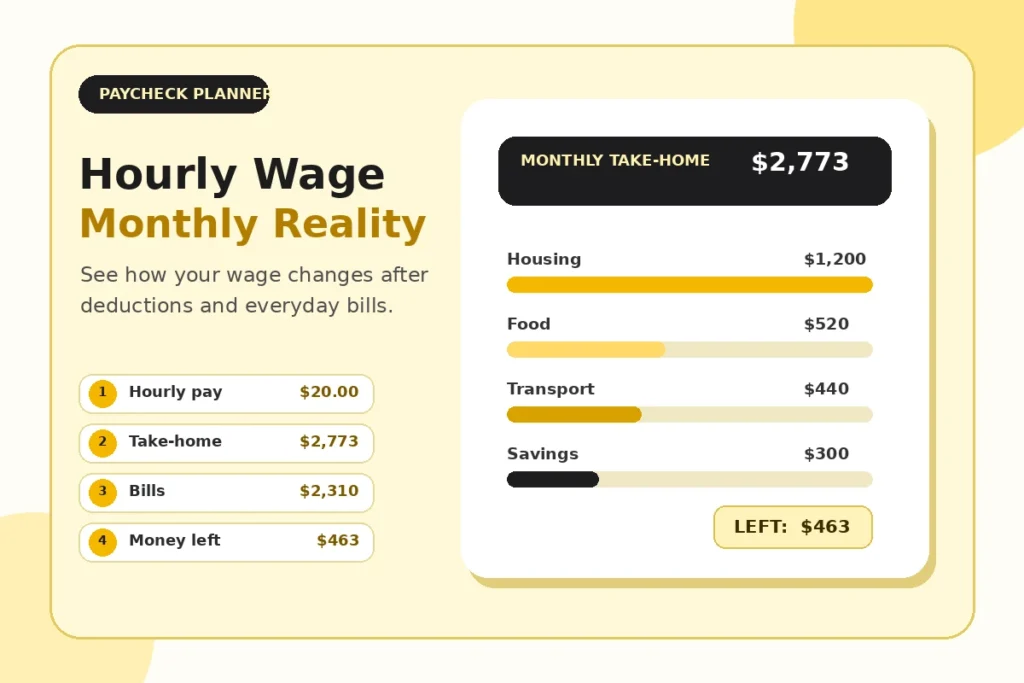
$15, $18, $20, or $25 an Hour Is How Much a Month After Bills?
Many people know their hourly wage but do not know how much money may actually be left after rent, groceries, utilities, car costs, insurance, phone bills, debt, subscriptions, and savings. This hourly wage after bills calculator helps you see a more realistic monthly budget instead of only looking at gross pay.
For example, someone making $15 an hour, $18 an hour, $20 an hour, or $25 an hour may have very different results depending on hours worked, deductions, rent, transportation, debt payments, and food costs. This real take-home pay calculator is designed to make those numbers easier to understand.
How This Hourly Wage Calculator Works
This hourly income calculator uses simple budgeting formulas to estimate gross pay, estimated take-home pay, and money left after bills.
- Hourly wage × hours per week = weekly gross pay
- Weekly gross pay × 52 = yearly gross pay
- Yearly gross pay ÷ 12 = monthly gross pay
- Monthly gross pay minus estimated deductions = estimated take-home pay
- Estimated take-home pay minus monthly bills = money left after bills
The calculator also includes overtime pay, biweekly pay estimates, rent percentage, bills percentage, savings percentage, a required hourly wage feature, and a what-if wage increase comparison.
What Expenses Should You Include?
To get a useful result from this monthly bills calculator, include the regular bills and expenses that affect your paycheck each month.
- Rent or mortgage
- Utilities
- Groceries
- Transportation
- Insurance
- Phone
- Internet
- Debt payments
- Subscriptions
- Savings
- Emergency fund
- Childcare
- Pet expenses
Why Take-Home Pay Is Different From Gross Pay
Gross pay is your income before deductions. Take-home pay is the amount you may actually receive after taxes, Social Security, Medicare, health insurance, retirement contributions, and other paycheck deductions. This take home pay calculator does not calculate exact taxes, but it helps you estimate a realistic paycheck after deductions using a percentage you choose.
Because deductions can vary by state, employer, benefits, and filing status, this hourly paycheck calculator should be used as a planning tool rather than a payroll or tax tool.
How Much Money Should Be Left After Bills?
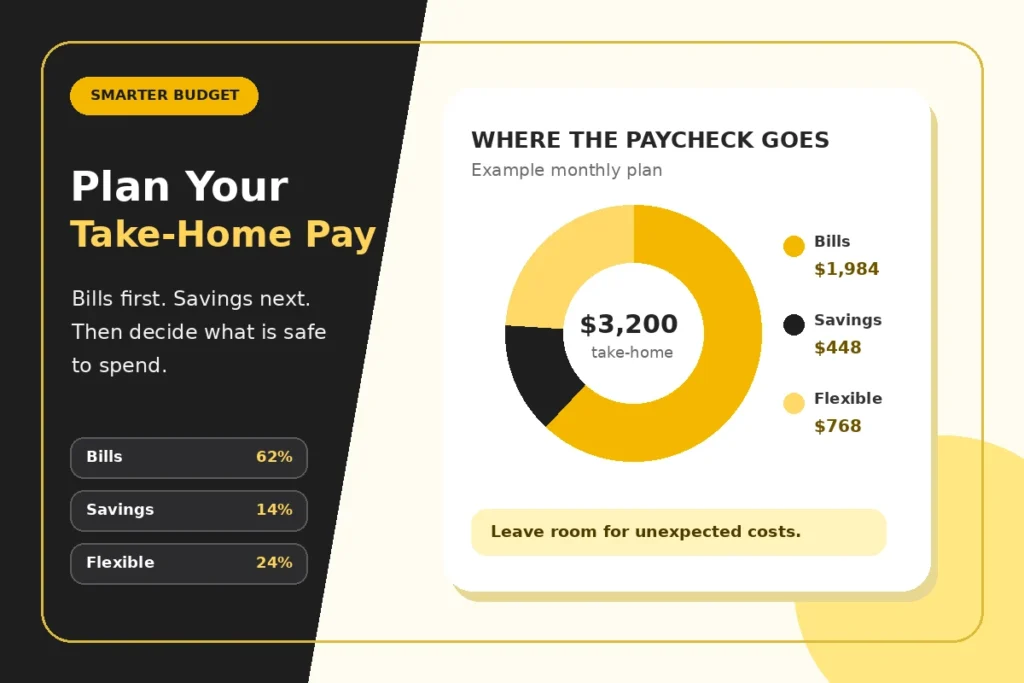
There is no perfect amount that should be left after bills because every household is different. However, it is usually helpful to leave room for savings, emergency expenses, medical costs, car repairs, school costs, family needs, and unexpected bills.
If most of your take-home pay goes toward fixed monthly expenses, your budget may feel tight even if your gross income looks good. A paycheck after rent calculator can help you see whether rent, transportation, and debt are taking too much of your monthly income.
Hourly Wage Examples
Here are simple examples based on 40 hours per week and 52 weeks per year before deductions. Monthly gross pay is estimated by dividing yearly gross pay by 12.
| Hourly wage |
Weekly gross pay |
Monthly gross pay |
Yearly gross pay |
| $15/hour |
$600.00 |
$2,600.00 |
$31,200.00 |
| $18/hour |
$720.00 |
$3,120.00 |
$37,440.00 |
| $20/hour |
$800.00 |
$3,466.67 |
$41,600.00 |
| $25/hour |
$1,000.00 |
$4,333.33 |
$52,000.00 |
| $30/hour |
$1,200.00 |
$5,200.00 |
$62,400.00 |
Who Can Use This Calculator?
This hourly wage budget calculator can help many people in the United States understand income, bills, and leftover money.
- Hourly workers
- Part-time workers
- Full-time workers
- Students
- Retail employees
- Restaurant workers
- Delivery drivers
- Warehouse workers
- Freelancers paid hourly
- People comparing job offers
- People planning rent and monthly bills
Tips to Improve Your Monthly Budget
After using the money left after bills calculator, review your largest expenses first. Small changes can help, but rent, transportation, debt, insurance, and food usually make the biggest difference.
- Track subscriptions and cancel services you do not use.
- Compare phone and internet plans once or twice per year.
- Reduce eating out and plan simple meals at home.
- Build a small emergency fund before increasing lifestyle spending.
- Avoid rent that takes too much of your estimated take-home pay.
- Review car payment, fuel, repair, and insurance costs together.
- Increase work hours if possible and healthy for your schedule.
- Compare a higher wage job offer before accepting or changing jobs.