Helpful renter guide
How to review a security deposit deduction
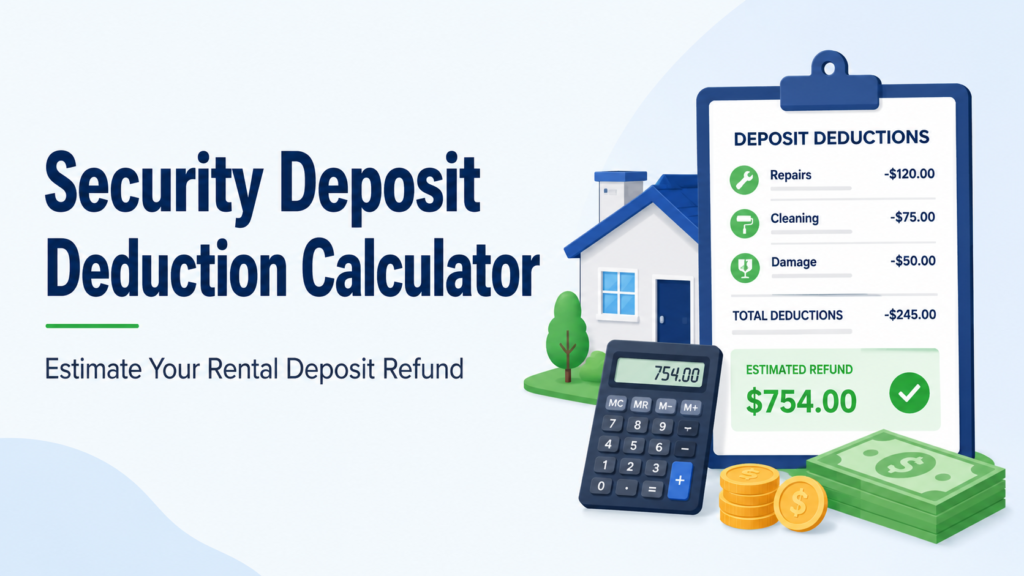
The calculator gives you a clear number first. The guide below explains what that number means, what records to compare, and what to check before accepting or questioning a charge.
How this calculator works
Start with the refundable deposit you actually paid. Add a refundable pet deposit only when it belongs in the same refund calculation. Then enter the charges you realistically expect, such as cleaning, unpaid rent, utility balances, replacement keys, or repairs. Find New Daily subtracts those entries and shows the estimated refund, deduction total, refund percentage, possible amount still owed, and an equal roommate split.
Treat the result as a planning figure rather than a final statement. A landlord may use different numbers, and a charge can still be questionable even when the arithmetic is correct.
What to compare with an itemized statement
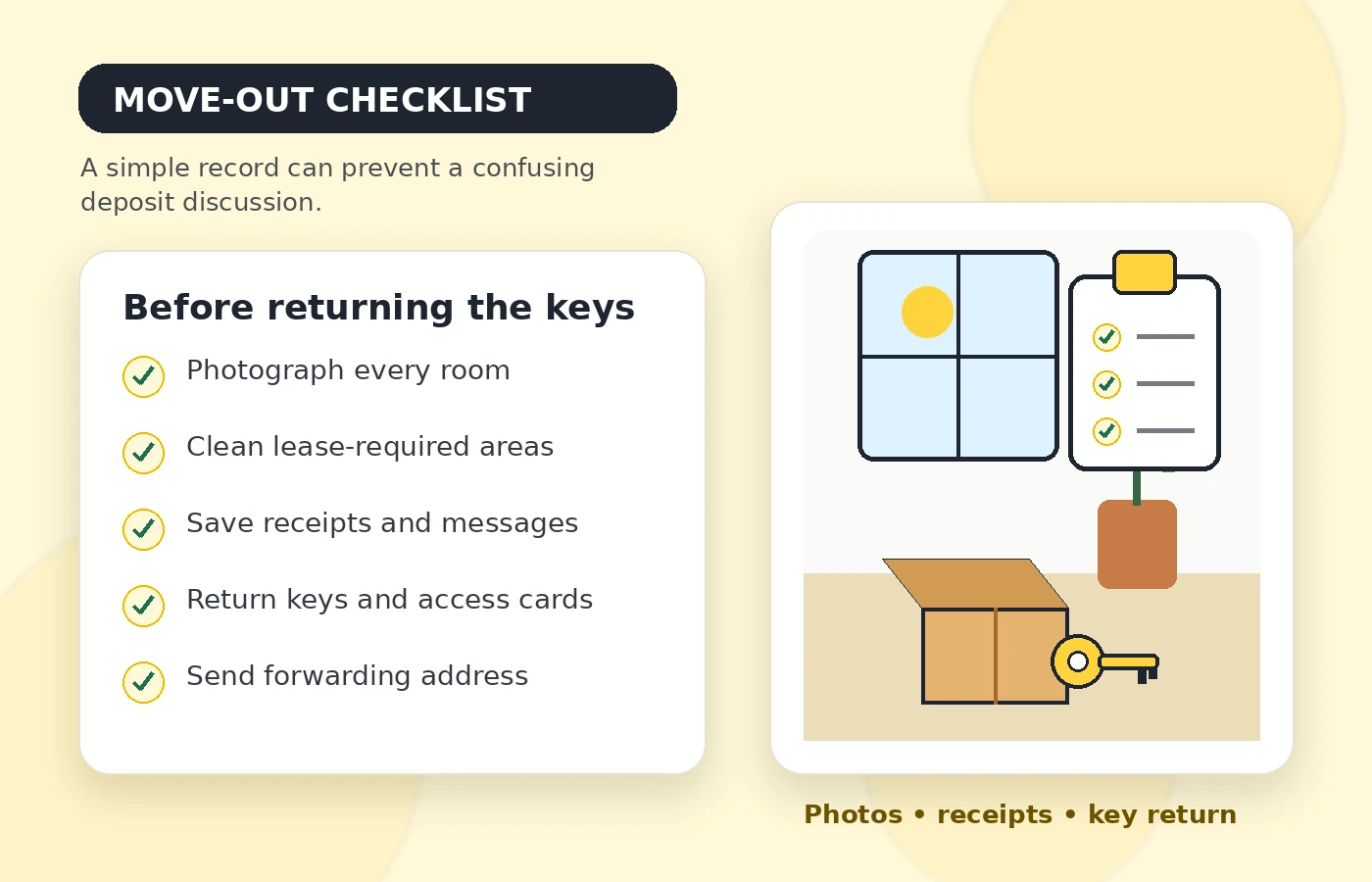
Read each line slowly. Match it with the lease, move-in photos, move-out photos, inspection notes, receipts, and written communication. Look for vague descriptions, duplicate charges, full replacement costs for older items, or cleaning work that is not explained. Keep the discussion focused on specific entries rather than the total alone.
Cleaning and repair charges
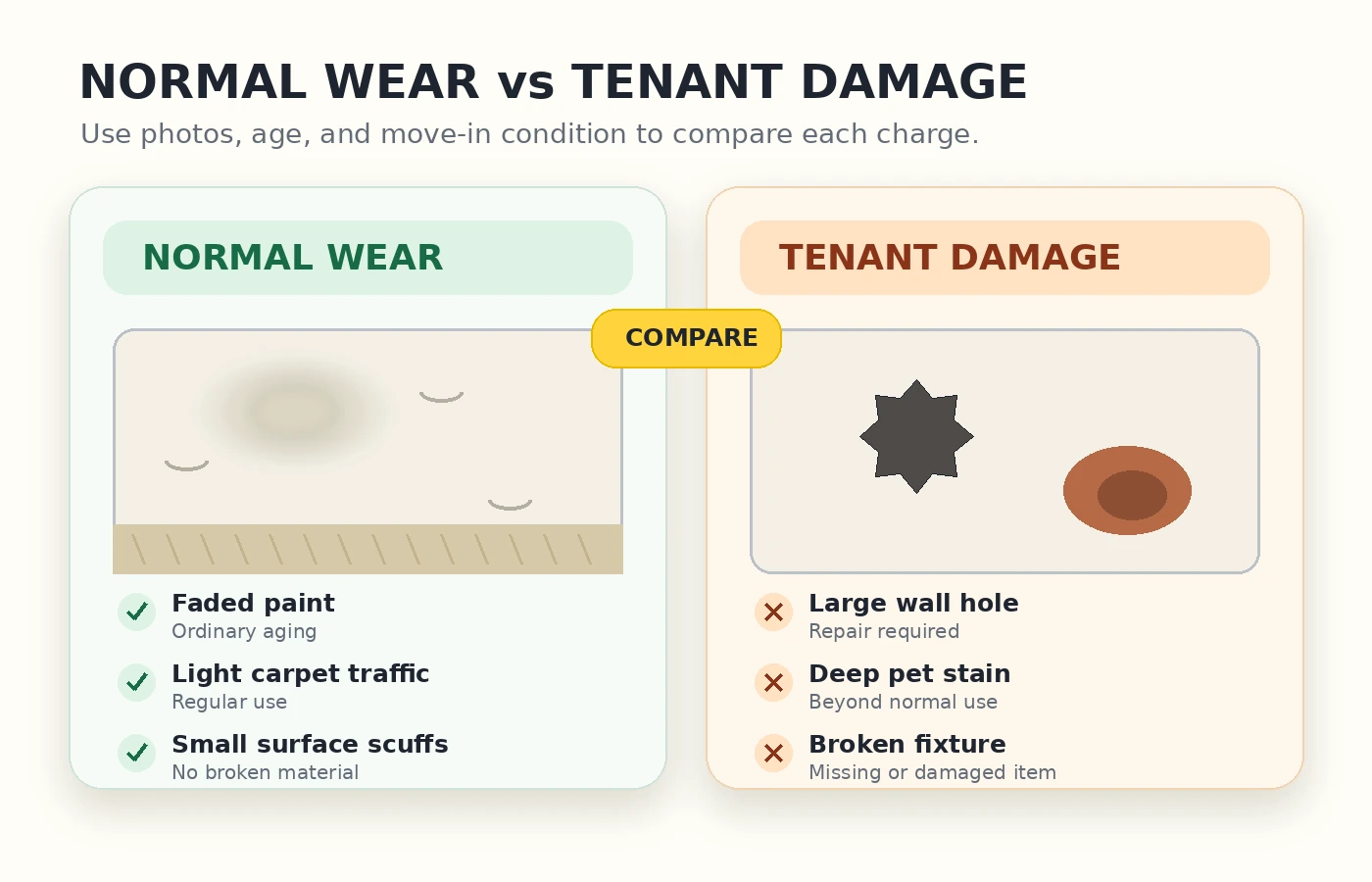
A cleaning charge may be easier to understand when it names the work completed and the amount paid. Repair charges should identify what was damaged and how the cost was calculated. Ordinary use, age, and previous condition can matter. The calculator does not decide whether a charge is lawful; it helps you see how much each charge changes the expected refund.
Roommate deposits
The roommate result uses a simple equal split. Real arrangements are often different. One person may have paid more of the deposit, or a deduction may relate to one bedroom or one tenant. Use the equal split as a starting point, then adjust the private settlement to match the lease and payment records.
What to do when the estimate and statement do not match
First, check that you entered the same deposit and charges shown on the statement. Then write down the entries you do not understand and ask for supporting details. Keep your request polite, dated, and in writing. Save copies of everything you send or receive. For a legal interpretation or deadline, use an official housing resource or qualified local professional.