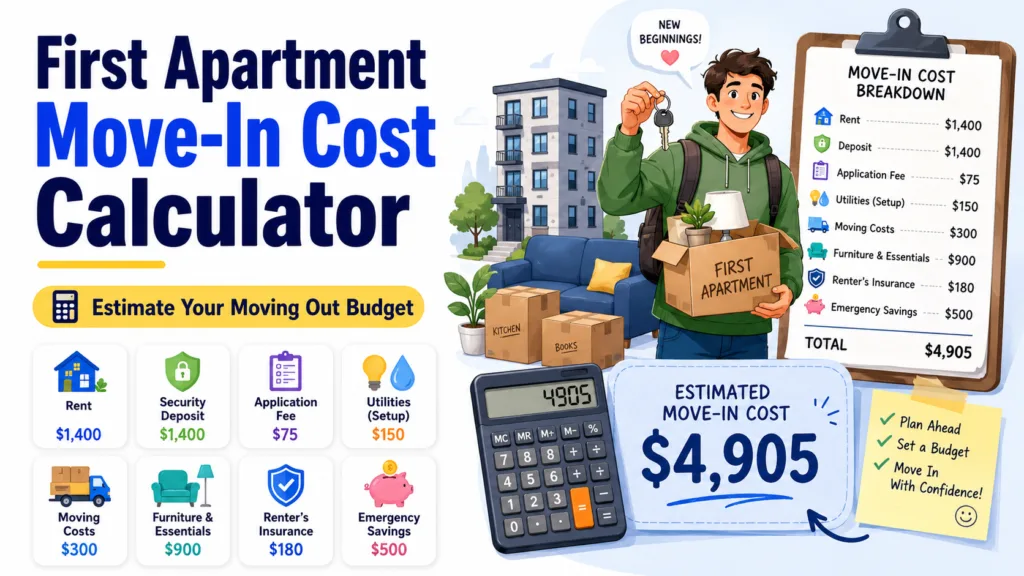
First Apartment Move-In Cost Calculator

Use this first apartment move-in cost calculator to estimate how much money you may need before moving into your first apartment. Add rent, security deposit, application fees, utility setup, moving costs, furniture, renter’s insurance, and emergency savings to get a realistic first apartment budget.

This calculator is an estimate only. Actual apartment fees, deposits, utility charges, and moving costs vary by landlord, city, state, credit history, and personal situation.
Disclaimer: This First Apartment Move-In Cost Calculator is for educational and planning purposes only. It provides an estimate based on the numbers you enter. Actual rent, security deposits, application fees, utility deposits, moving costs, furniture costs, and renter’s insurance costs may vary by landlord, apartment community, city, state, credit history, lease terms, and personal situation. This tool is not legal, financial, or real estate advice.

Apartment Rent and Fees

Enter the upfront apartment costs your landlord or property manager may charge before move-in.

Utility and Service Setup

Add estimated setup fees or deposits for utilities, internet, and renter’s insurance.

Moving Costs

Estimate the cost of moving your belongings, cleaning, storage, fuel, boxes, or movers.

Furniture and Household Setup

Use quick presets or enter your own estimates for furniture, kitchen items, bathroom items, and basic supplies.


Roommate Split Option

Choose which categories are shared. Shared categories are divided by the number of roommates.

Savings and Affordability Check

Compare your estimated move-in cost with your current savings and emergency buffer goal.

First Apartment Checklist

Use this first apartment checklist to make sure you do not forget common move-in costs and basic household items.

  • First month’s rent
  • Security deposit
  • Application fee
  • Admin fee
  • Last month’s rent, if required
  • Renter’s insurance
  • Electricity setup
  • Gas setup
  • Water/trash setup
  • Internet setup
  • Moving truck or movers
  • Packing supplies
  • Mattress and bedding
  • Kitchen basics
  • Bathroom basics
  • Cleaning supplies
  • Emergency fund

How Much Money Do You Need to Move Into Your First Apartment?

Moving into your first apartment is exciting, but it can also be more expensive than many first-time renters expect. A common mistake is only thinking about the monthly rent. In reality, the cost to move into an apartment may include first month’s rent, a security deposit, application fees, admin fees, utility deposits, internet installation, renter’s insurance, moving supplies, furniture, cleaning supplies, kitchen basics, and emergency savings.

This first apartment move-in cost calculator helps you create a more realistic first apartment budget. Instead of guessing, you can enter each major expense and see your estimated total move-in cost. This is especially helpful for students, young adults, new renters, people moving out of their parents’ home, and anyone planning a move to a new city.

The amount you should save before moving out depends on your rent, location, lease terms, credit history, furniture needs, roommate situation, and moving distance. Someone moving into a furnished apartment with roommates may need much less upfront than someone moving alone into an unfurnished apartment in a high-cost city. This apartment startup cost calculator is designed to help both types of renters plan ahead.

First Apartment Budget Calculator for New Renters

A good first apartment budget should include more than the rent payment. Many renters need to pay several costs before they even receive the keys. A landlord or apartment community may require first month’s rent, a security deposit, a pet deposit, a parking fee, an application fee, or an admin fee. Some places may also ask for last month’s rent upfront.

After lease-related fees, you may still need money for electricity, gas, water, trash, internet, renter’s insurance, furniture, moving transportation, boxes, tape, cleaning supplies, and basic household items. If you do not plan for these items, your move can quickly become stressful.

Common First Apartment Move-In Costs

The table below shows common apartment move-in costs for first-time renters in the USA. These are examples only. Actual amounts can vary widely by state, city, landlord, apartment community, credit history, and personal needs.

Cost Item What It Means Common Example
First month’s rent The first rent payment due before or at move-in. $1,000–$2,500+
Security deposit A refundable deposit used for damages or unpaid rent, depending on lease terms and local rules. Often equal to one month’s rent
Application/admin fees Fees for applying, screening, or processing lease paperwork. $25–$300+
Utility setup Deposits or activation fees for electricity, gas, water, trash, or internet. $100–$500+
Moving costs Truck rental, movers, fuel, boxes, tape, and packing supplies. $100–$2,000+
Furniture and basics Bed, mattress, seating, kitchen items, bathroom items, and cleaning supplies. $500–$3,000+
Emergency buffer Money left over after moving for rent, bills, groceries, and surprises. 1–3 months of expenses

What First-Time Renters Often Forget

First-time renters often remember rent and the security deposit, but they forget smaller items that add up quickly. Wi-Fi installation, utility deposits, laundry costs, parking fees, trash fees, pet rent, renter’s insurance, kitchen supplies, a shower curtain, a plunger, trash cans, cleaning products, and basic tools can all become part of your real move-in budget.

Many apartments do not include everything you need for daily living. Even a simple first apartment may require plates, cups, pans, towels, toilet paper, laundry detergent, a trash can, a broom, a mop, a mattress, bedding, lamps, extension cords, and basic storage items. This is why an apartment move-in cost calculator can be more helpful than only using a rent affordability calculator.

How Much Should You Save Before Moving Out?

A practical goal is to save enough for your upfront apartment fees, utility setup, moving costs, essential furniture, basic household items, and some emergency savings. If possible, it is helpful to have an emergency buffer after you move, not just enough money to pay the move-in bill.

For example, if your rent is $1,500 and your estimated monthly expenses after moving are $1,200, one month of emergency buffer would be $2,700. Two months would be $5,400. You may not always be able to save that much before moving, but seeing the number helps you understand the gap and plan more carefully.

How to Save Money Before Moving Out

You can lower your first apartment move-in cost by making smart choices before signing a lease. Moving with roommates can reduce rent, deposits, utilities, internet, and furniture costs. Choosing a furnished apartment can reduce upfront furniture spending. Buying used furniture can make a big difference, especially for couches, tables, desks, and shelves.

  • Move with roommates to split rent, utilities, furniture, and moving costs.
  • Choose a furnished apartment if buying furniture would be too expensive.
  • Buy used furniture from local marketplaces, thrift stores, or friends.
  • Start with only essentials instead of decorating everything immediately.
  • Ask landlords about deposit specials or move-in promotions.
  • Compare internet providers before installation.
  • Move during cheaper days if truck or mover rates change by date.
  • Borrow tools, dollies, storage bins, or moving supplies if possible.
  • Avoid unnecessary decor at first.
  • Build a small emergency fund before signing a lease.

How This Apartment Move-In Cost Calculator Works

This moving out budget calculator adds your apartment fees, utility setup costs, moving costs, and furniture or household setup costs. The basic formula is:

Total move-in cost = apartment fees + utility setup + moving costs + furniture and household items

The recommended savings estimate adds an emergency buffer:

Recommended savings = total move-in cost + emergency buffer

The emergency buffer is based on your monthly rent, estimated monthly expenses after moving, and the number of emergency months you choose. If roommate mode is turned on, shared categories are divided by the number of roommates. Categories not selected as shared are counted in full for your personal estimate.

Tips to Lower Your Apartment Move-In Costs

Before applying for an apartment, ask the landlord or property manager for a full list of move-in costs. Ask whether the security deposit is refundable, whether there is an admin fee, whether utilities are included, and whether renter’s insurance is required. If you have a pet, ask about pet deposit, pet fee, and monthly pet rent.

Also think about your first month after moving. You may need groceries, laundry money, transportation, basic repairs, cleaning products, and household items. A good first apartment budget calculator should help you avoid spending all your savings on move-in day.

Frequently Asked Questions

It depends on your rent, security deposit, location, furniture needs, moving costs, and roommate situation. A common starting point is enough for upfront apartment fees, moving costs, basic setup items, and at least some emergency savings.

Many landlords charge around one month’s rent, but the amount can vary by state, landlord, lease terms, credit history, and local rules. Always review your lease and ask the landlord for details.

Many apartment communities require renter’s insurance. Even when it is not required, it may help protect personal belongings and provide liability coverage.

It depends on rent, deposits, roommates, city, furniture needs, and moving distance. In some lower-cost situations it may be possible, but in many US cities it may be tight.

First month’s rent and security deposit are usually the largest upfront apartment costs. Furniture and moving costs can also become expensive, especially for an unfurnished apartment or a long-distance move.

People often forget utility setup, internet installation, parking, renter’s insurance, pet fees, cleaning supplies, bathroom items, kitchen basics, laundry costs, and emergency savings.

You can reduce your move-in cost by using roommates, buying used furniture, choosing a furnished apartment, choosing a smaller apartment, using fewer moving services, looking for deposit specials, and buying only essential items first.

No. This calculator is only an educational estimate. Actual costs vary and users should review their lease, landlord fees, local rules, and personal budget.

Disclaimer: This First Apartment Move-In Cost Calculator is for educational and planning purposes only. It provides an estimate based on the numbers you enter. Actual rent, security deposits, application fees, utility deposits, moving costs, furniture costs, and renter’s insurance costs may vary by landlord, apartment community, city, state, credit history, lease terms, and personal situation. This tool is not legal, financial, or real estate advice.