Free calculator by Find New Daily

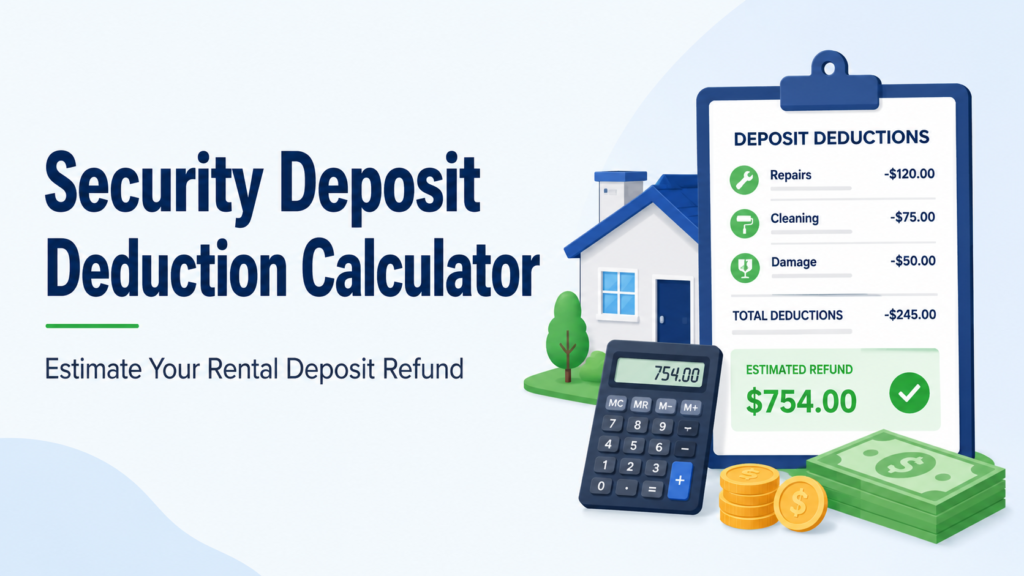
Security Deposit Deduction Calculator | Estimate Your Rental Deposit Refund

Estimate your possible rental deposit refund after cleaning, damage, unpaid rent, utilities, and other move-out charges.

Instant estimate No signup Mobile friendly
Start calculating
Security Deposit Deduction Calculator | Estimate Your Rental Deposit Refund
Planning estimate only: This tool is not legal advice. Deposit rules and return deadlines vary by lease and location.
1

Deposit Details

$
Enter the total refundable deposit you paid when moving in.
$
If your pet deposit was non-refundable, do not include it unless you want to estimate all move-out charges together.
$
This helps compare deductions against your rent amount.
Use 1 if you paid the deposit alone.
Security deposit return deadlines and deduction rules vary by state.
2

Move-Out Details

3

Deduction Details

Only include charges you expect may be deducted from your deposit. Do not include normal wear and tear unless your landlord has listed it as a charge.

$
$
$
$
$
Include any unpaid rent you expect may be deducted.
$
$
$
$
$
Damage beyond normal use may reduce your deposit, especially if repairs are needed.
4

Documentation Checklist

Check the items you have. Each checked item adds 10 points to your documentation score.

Documentation Score: 0/100

Weak documentation

This score is not legal proof. It simply helps you see how prepared you are to review or dispute deductions.
5

Your Estimated Results

Estimated Security Deposit Refund $0
Total Estimated Deductions $0
Refund Percentage 0%
Possible Amount Still Owed $0
Estimated Refund Per Roommate $0
Documentation Score 0/100
Enter your deposit and possible deductions to estimate your refund.
Security deposit return deadlines and deduction rules vary by state. Select your state to see a reminder.

Copyable Summary

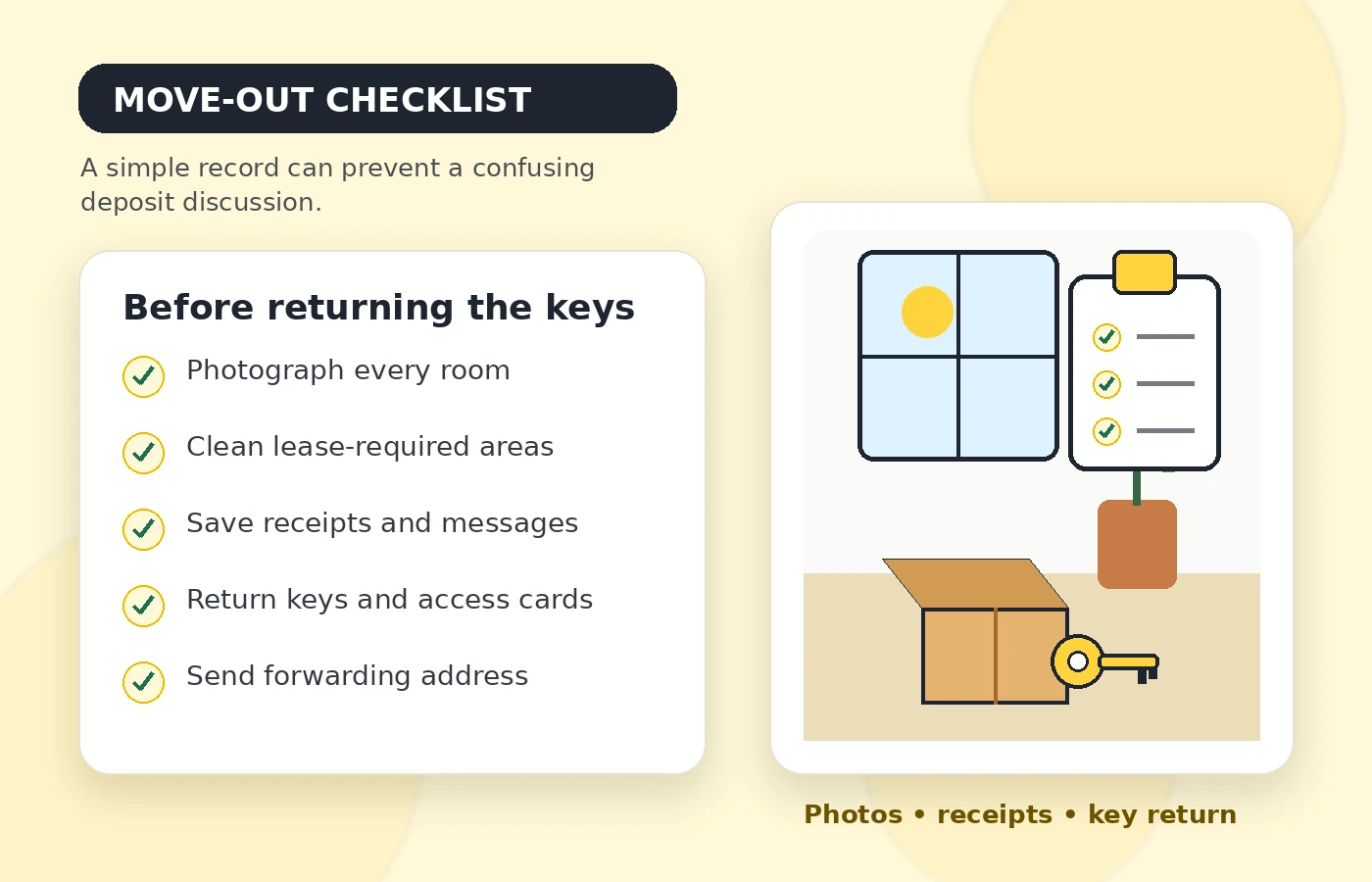
Before you hand over the keys

A practical move-out checklist

A calm, documented move-out can make the deposit conversation much easier. Work through this list while the rental is still accessible, not after you have already left.

  • Photograph every room in good daylight.
  • Record appliances, floors, walls, windows, and fixtures.
  • Remove trash and all personal belongings.
  • Clean the areas named in your lease or move-out guide.
  • Return keys, remotes, parking passes, and access cards.
  • Send your forwarding address in writing.
  • Keep receipts, emails, and the final walkthrough record.
  • Ask for an itemized statement when money is withheld.
Renter completing a move-out checklist before returning apartment keys
Keep the photos and paperwork together until the refund is settled.

Know the difference

Normal wear is not the same as damage

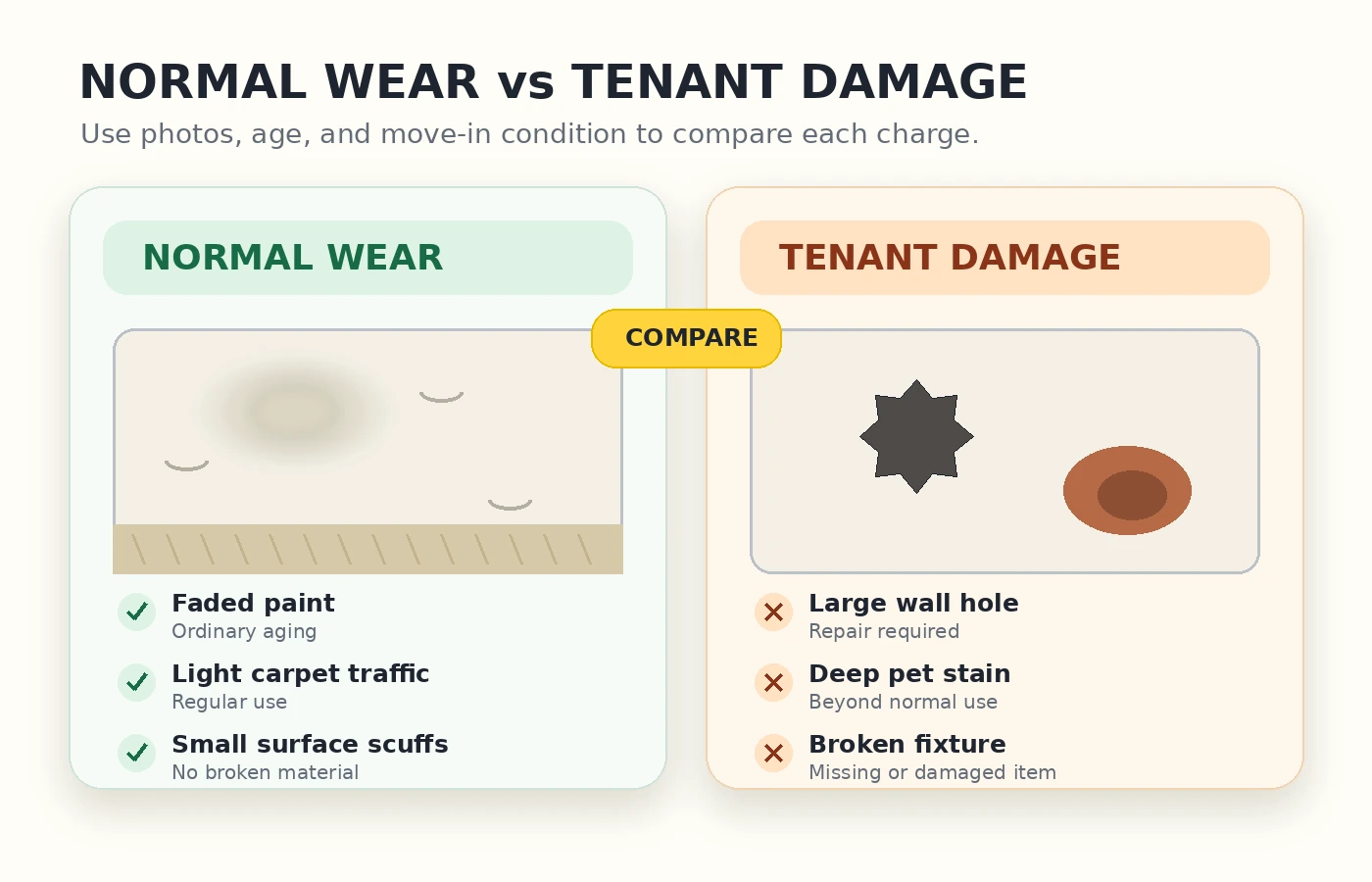
Everyday aging can look untidy without being tenant-caused damage. Compare the condition with your move-in records, the age of the item, and the wording in your lease before treating every mark as a valid deduction.

Often ordinary wear

  • Light carpet traffic marks
  • Faded paint or curtains
  • Small scuffs from regular use
  • Older parts wearing out naturally

May be tenant damage

  • Large holes or broken doors
  • Burns, deep stains, or pet damage
  • Missing fixtures or access devices
  • Excessive rubbish left behind
Visual comparison of normal rental wear and tenant-caused damage
The final decision depends on the lease, evidence, and local rules.

Helpful renter guide

How to review a security deposit deduction

The calculator gives you a clear number first. The guide below explains what that number means, what records to compare, and what to check before accepting or questioning a charge.

How this calculator works

Start with the refundable deposit you actually paid. Add a refundable pet deposit only when it belongs in the same refund calculation. Then enter the charges you realistically expect, such as cleaning, unpaid rent, utility balances, replacement keys, or repairs. Find New Daily subtracts those entries and shows the estimated refund, deduction total, refund percentage, possible amount still owed, and an equal roommate split.

Treat the result as a planning figure rather than a final statement. A landlord may use different numbers, and a charge can still be questionable even when the arithmetic is correct.

What to compare with an itemized statement

Read each line slowly. Match it with the lease, move-in photos, move-out photos, inspection notes, receipts, and written communication. Look for vague descriptions, duplicate charges, full replacement costs for older items, or cleaning work that is not explained. Keep the discussion focused on specific entries rather than the total alone.

Cleaning and repair charges

A cleaning charge may be easier to understand when it names the work completed and the amount paid. Repair charges should identify what was damaged and how the cost was calculated. Ordinary use, age, and previous condition can matter. The calculator does not decide whether a charge is lawful; it helps you see how much each charge changes the expected refund.

Roommate deposits

The roommate result uses a simple equal split. Real arrangements are often different. One person may have paid more of the deposit, or a deduction may relate to one bedroom or one tenant. Use the equal split as a starting point, then adjust the private settlement to match the lease and payment records.

What to do when the estimate and statement do not match

First, check that you entered the same deposit and charges shown on the statement. Then write down the entries you do not understand and ask for supporting details. Keep your request polite, dated, and in writing. Save copies of everything you send or receive. For a legal interpretation or deadline, use an official housing resource or qualified local professional.


About this estimate

Find New Daily provides this calculator for educational and budgeting use. It is not legal advice and does not replace your lease, an official itemized statement, or state and local rules.

Common questions

Security Deposit Deduction Calculator | Estimate Your Rental Deposit Refund FAQs

How much of my security deposit might I get back?

Subtract expected deductions from the refundable deposit. Your actual refund can differ because the lease, evidence, and local rules may affect which charges are allowed.

Should I include a non-refundable pet fee?

No. Enter a pet amount only when it was refundable or when you intentionally want to compare all move-out charges in one estimate.

Can unpaid rent or utilities reduce the refund?

They may reduce a deposit when the lease and applicable rules allow it. Check the balance and supporting statement carefully.

What records are useful when questioning a deduction?

Move-in and move-out photos, the lease, receipts, walkthrough notes, key-return records, and written communication can help you review a charge.

Is the calculator legal advice?

No. It is a planning and estimation tool. Use official local resources or a qualified professional for legal guidance.